Thursday, 30 June 2011

Violence begets violence

There is just one video and one photo that I want to publish in that post. It is just 30 seconds. For people who don't understand Greek, the translation of the sentences is given.


"Get out of the Square! Out!
... 
Don't hit me!"

Image from reuters as presented in www.newsit.gr

Sunday, 5 June 2011

A solitary swallow


Odysseus Elytis (2nd November 1911 – 18st March 1996) [1] was maybe the greatest Greek poet. In 1979 he was awarded with the Nobel Prize in Literature [2]. Some of his poems were set to music by Mikis Theodorakis, another Greek great persona.  As I said, in a previous post I am not the best in literature as I found sometimes the content of the poems a little bit “strange”. Nevertheless, there are artists who created real masterpieces, like Elytis did. For me, the best collection of poems ever written, is Elytis' “Axion Estin” (or translated in English as “It is truly meet”). One of the best poems included in this collection, and my favorite, is the one with the name “A solitary swallow”. For me this poem is a hymn to revolution. Take a look at the following lyrics [3]:

A solitary swallow
and Spring’s great worth is found.
It takes a lot of work
to make the sun turn round.
Their shoulder to the wheels
it takes a thousand dead.
It also takes the living
to offer up their blood.

Elytis declares in this poem that the arrival of a new era can become reality but the cooperation between people and unfortunately their blood is needed.  It was written in 1959 but it is far from outdated. The video above is this poem with music (singer: G. Mpithikotsis, music by M. Theodorakis). I strongly advise you to read the whole poem or the whole “Axion Estin” collection (in English) here.

[1] http://portal.kathimerini.gr/4dcgi/_w_articles_kathextra_6_17/10/2007_208375
[2] http://nobelprize.org/nobel_prizes/literature/laureates/1979/elytis.html
[3] "The collected poems of Odysseus Elytis", Jeffrey Carson, John Hopkins University press, 1997, p. 148

Money: Target locked.

“Ma'am, I know you've done your homework and so you know that money isn't a big part of my life, but at the moment I could buy Mt. Auburn Street, take the Phoenix Club, and turn it into my ping-pong room.” [1]

What’s the goal of the education? Is it the obvious one: gain knowledge? Or the hidden one: gain money? From my point of view: Both.

We spend almost the one fourth of our lives studying (in most cases studying hard). I know that teenagers in Greece, and I suppose in all the countries of the developed world, sacrifice the most carefree years of their life carrying heavy bags, listening to “I-know-everything” professors and living without any kind of free time activities.

When I was younger, my grandmother said that this process is necessary in order to build a good life, create a family and have the resources to grow your children wealthy. Resources? She never made that clear, and unfortunately I can’t ask her to make it clear now. Did she mean money or knowledge? Is knowledge, including practical skills, culture, experiences enough to create the circumstances under which life is considered to be absolutely fabulous? A bunch of questions and here are my thoughts on that:

No, knowledge is not enough. We study to gain money, too. Actually, we study to find a job to earn as much as we can. It is a clear trade. Since the age of 22-25 we pay to buy the goods and then we sell those goods to future employers, trying to have the biggest profit. Of course, the sold knowledge remains to our possession as it is an intangible good. And we can sell it again to hit a better salary. However, it still exists. Knowledge remains in our brain. It helps as to organize better our lives, to make better decisions, to live a life that fit our needs.

I believe that this educational pain is worth doing. It is not only a way to refine the working environment but the whole life.


[1] Quote from the movie “The social network”. In the movie, Mark Zuckerberg said that as part of his apology when he was sued by the Winklevoss brothers for the paternity of Facebook.  Sometimes knowledge is not enough, you need to be lucky, too.

Sunday, 29 May 2011

The Polis

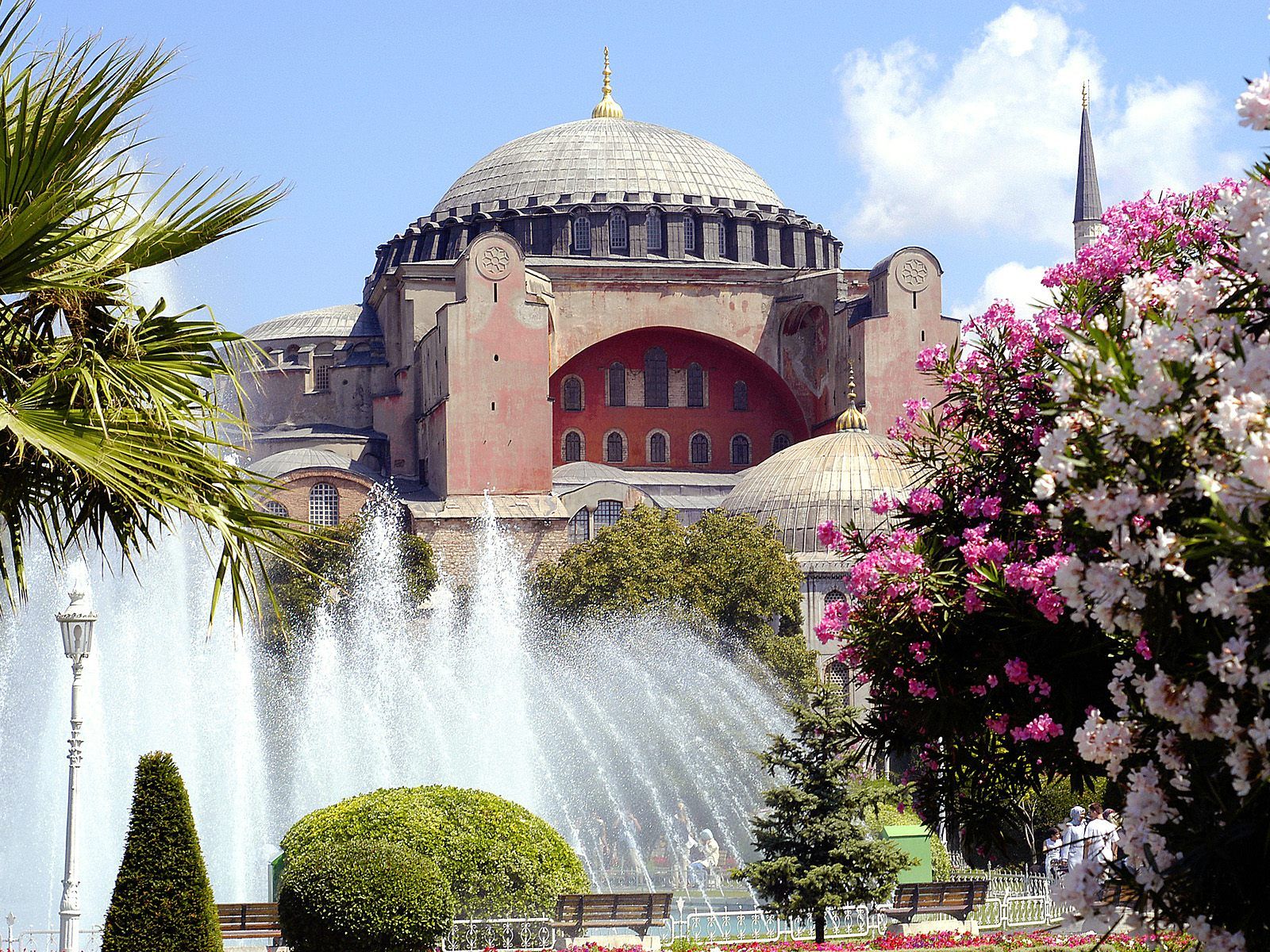
Agia Sofia Temple [1].
In my opinion, it is the most impressing architectural creation all over the world.
29th of May 1453. 558 years ago. The Capital of the great Byzantine Empire was captured by the Ottoman Turks. Constantinople (or Istanbul, or Polis) became the capital of the Ottoman Empire. After 8 weeks of siege, the last emperor, Constantine the XI was killed and Sultan Mehmed II conquered the City. According to historians, Constantine said the following marvelous phrase to Sultan Mehmed II: “Delivering you the City, is not my decision and it is not a decision of anyone of its citizens as we all unsolicited decide that we will die*” [2].  Leaders like him should be an exemplar of the politicians of the new era. Do not sell your nations to brutal financial killers. Resist and fight until death.
Read here more about Constantinople, one of the best Greek achievements!

[1]: Image taken from http://www.citypictures.org/
[2]: http://www.blog.gr/article.php?id=33646&category_id=23
* The translation is mine and I believe that it represents the original meaning of the phrase.

Friday, 27 May 2011

Angry vs Angry Birds

Well, well. The previous post created some objections, a lot of discussions (that's probably the best outcome of that blog - for me). After the whole financial situation in Greece, the last thing that we should care about (right now, I mean right now) is who is responsible for creation of the problem. The only thing that we should think now is how we can get out safely from that situation. Then it would be easier to identify and punish the real guilty people (politicians, bankers, brokers or whatever). As I said the previous article was published after the creation through Facebook of a "motion" that it is cleverly called "Angry" (or "The angry people").

But, wait a minute... I talked about a movement called "Angry". Who are them? The answer is easy: They are people, pure people from my point of view, that are really angry about what is now happening in Greece. As they say, and I believe them, they don't belong to any political party and they have no leaders from political parties. Cool. What are their goals? The answer is easier than expected: They have NO goals. Honestly, what's the goal of that? Do you "Angry" people want the prime minister to leave the country? Do you want our country to leave the eurozone? Do you want our country to declare bankruptcy? Do you want to receive double salaries from tomorrow? I strongly believe that if we ask them, we will receive different answers which cover the whole range of the above questions. So, until they reach a final decision (basically, start discussing about that) on what are their goals, they are simply a group of confused people. 

So, I apologize for my terrible approach to your really acceptable protest, but I prefer another group of angry. Yeah, the angry birds! They have different colors, different skills but these cheering, funky birds, have at least a clear goal: Destroy the barriers and kill the ugly green pigs.

Angry birds is free for Android phones/tablets (link)

Wednesday, 25 May 2011

Viva la revolution

Did you ever hear the name Theodoros Pagkalos? Greeks say "Of course we know him", all the others "No, not at all". For all the others, T. Pagkalos is a Greek politician and he is elected from 1981 since now a member of the Greek parliament. Everyone admits that he is a very active politician. However he became famous in January 1996, when he was the Greek foreign minister. That period Greeks and Turks were almost came in war when the Turkish army stepped on a small Greek island and remove the Greek flag. T. Pagkalos became famous because it is claimed that he said that in order to avoid the war we can say to Greeks that the flag was removed not by the Turkish army but by the strong wind. 

The last 2 years he is the vice president of the Greek government. A second phrase that he said a year ago brought himself against the Greek citizens. While people were trying to convince themselves that the politicians are responsible for the dead-end in the Greek economy, he said "We ate them together" which means that you are responsible, too. This phrase will accompanying him for a long long time.

From my point of view that phrase is the biggest true word that this person ever said. The problem is that Greeks are still trying to convince themselves that it is not correct. The list of proofs that confirm that phrase is so big. The best proof is that almost every family in Greece has a member who works as a public servant. 

As the alcoholics say, "the best way to fight against it, is to admit it". So Greek people, we ate them together. You know that. Now try to solve the problem, not by protesting (really against whom? the people that we voted for?), but by simply being citizens that obey to the law, pay their taxes and not trying to befool the public financial mechanism. 

*All the above are personal thoughts of the writer and should be addressed like personal opinion and nothing more.
** The above was written a couple of weeks ago and it is published now as a result of the following 2 images. 

Young protesters in Spain are fighting against the socialist party and their prime minister, Jose Luis Zapatero.
Young protesters in Greece are fighting against the socialist party and their prime minister, George A. Papandreou. [through Facebook - Viva la revolution] 

Tuesday, 17 May 2011

Run to catch the bus

480 pages assessment delivered.
After a long long time I am back to express myself in this blog. To be honest, during this period I’d written two articles but I postpone their publication because I am not sure if they are offensive or they can create some uncomfortable situation to some friends of mine. Eventually, taking an MSc course isn’t the easiest situation you can deal with. Hours of study, countdown to deadlines and… running to catch the bus (for people who doesn’t know that, my principle “never run to catch a bus, another one will arrive shortly” was busted here in York, twice!).
Finally, the Practical Software Engineering & Management of Software Engineering module ended yesterday followed by a fest in the local pubs. 4 months working with 4 people from 4 different countries. Deal with 4 different cultures. A lot of 4s or a lot of lessons learnt? I strongly believe the second one. Let’s do some maths:
  • 7.648,42 are the kilometers between Athens and Beijing.
  • 5.009,51 kilometers from Athens to New Delhi.
  • 2.481,57 kilometers from Athens to Tehran.
  • 2.422,30 kilometers from Athens to London.
  • 1500+ hours of team working. 841 hours spent on defined project tasks.
  • More than 100 liters of coffee (= 300 pounds spent in vending machines)
What about culture?
  • Capital punishment is the penalty to Iranians if they declare that they are not religious.
  • In contrast, English people really don’t care about God.
  • Chinese boys have to buy a house to their girlfriends.
  • Indians smoke a lot, like Greeks.
  • Never bet against Iranians.
  • In China, you have to work at the place that you were born.
  • If an English man wants to speak real “everyday” English you cannot understand him, even if you hold a PhD in English language from the Cambridge University with the title “Understanding everyday English from English university students”.
  • ...
And finally, general stuff:
  • Conversation between two Greek boys is very sexy (yes, someone told that. WTF?).
  • Greeks can speak for boring things very passionate.
  • Democracy in software engineering sucks.
  • after 4 months Gu Zi became Gu Zili and got his glory back (sorry Steve ).
That’s all. It’s time to start my final project. Another 4-months experience starts from now. For the previous one, I want to thank Lyla, Steve, Ehsan and Vipin.